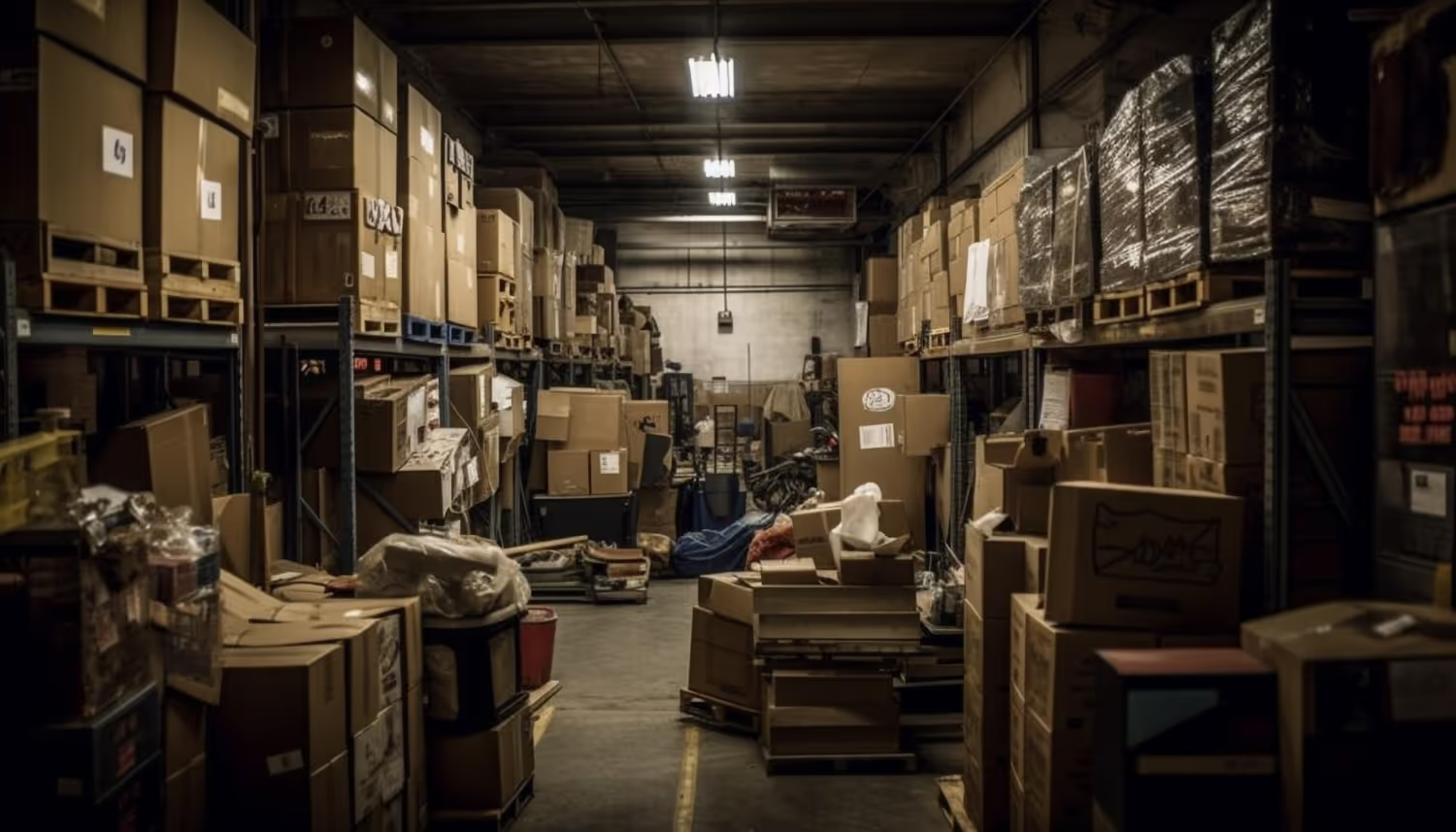
The cost is not just a lost sale
The instinct is to treat a stockout as a missed transaction. A product went out of stock; a sale did not happen. Move on. But the downstream cost runs much deeper.
According to research, when a product is unavailable, retailers lose nearly half of all intended purchases- consumers do not wait, they walk and they frequently do not return. Repeated stockouts signal disorganization, erode trust and accelerate churn in ways that quarterly revenue reports are slow to capture.
Overstocking carries its own quiet damage. Excess inventory ties up working capital, inflates storage costs, and eventually forces markdowns that compress margins. According to Supply Chain Management Review, overstocking central warehouses while stores run empty creates a particularly destructive outcome, simultaneous excess and shortage, hitting both the balance sheet and the customer experience at once.
Both problems, when they occur together, are not bad luck. They are a systems failure.
The data exists, integration does not
Here is what makes this frustrating in 2026: most organizations have the data they need to avoid these problems. They have sales histories, supplier lead times, seasonal patterns and demand signals. The gap is almost never data availability. It is data integration.
Inventory decisions are still being made in functional silos. Procurement teams operate on one planning cycle. Sales teams operate on another. Logistics and warehouse management sit in a third system entirely. When these functions do not share a common view of demand in real time, even good data becomes unreliable for the people who need to act on it.
According to Gartner's Future of Supply Chain research, 95% of supply chains must quickly react to change — but only 7% can actually execute decisions in real time. That gap is not a technology gap. It is a structural one. Organizations have invested in tools without investing in the workflows, governance, and cross-functional alignment required to make those tools operational.
Forecasting that is always one disruption behind
Traditional demand forecasting was designed for a world that no longer exists. It relied on historical averages, stable lead times and predictable consumer behavior. All three of those assumptions have been under continuous pressure since 2020 and show no signs of stabilizing.
McKinsey's 2025 Supply Chain Risk Survey found that 82% of companies surveyed said their supply chains were affected by new tariffs, with demand patterns and supplier costs shifting faster than planning cycles could absorb. When the planning model cannot keep pace with real-world volatility, the output is inevitable: either too much inventory ordered defensively, or too little ordered optimistically.
The problem compounds when organizations treat forecasting as a periodic activity rather than a continuous one. A demand plan built in January and reviewed in April is already operating on outdated assumptions. Market signals, consumer search behavior, competitor pricing, regional weather and promotional calendars move daily. Inventory positioning decisions cannot wait for the monthly planning meeting.
Technology adoption without operational readiness
AI-powered forecasting, demand sensing tools and inventory optimization platforms have become more accessible and more capable than at any point before. The adoption argument is no longer about cost or availability. Yet the results remain inconsistent.
Gartner warns that by 2028, 60% of supply chain digital adoption efforts will fail to deliver promised value not because the technology is inadequate, but because organizations have underinvested in the learning, workflow change and governance required to operationalize it. A demand forecasting tool that produces outputs nobody trusts, or that feeds into a procurement process nobody has redesigned, delivers dashboards rather than decisions.
This is the pattern that repeats. Technology is deployed. Old processes run alongside it. The new system gets blamed when inventory problems persist. The root cause, fragmented decision-making, poor data ownership and misaligned incentives across functions goes unaddressed.
The real fix is structural, not software
Solving stockouts and overstocking in 2026 does not start with selecting a better platform. It starts with getting honest about where the real breakdown is occurring.
For most organizations, that breakdown is somewhere between the data and the decision, in the handoff between systems and the people who need to act on what those systems produce. Improving that handoff requires clearer ownership, tighter cross-functional coordination and a planning cadence built around real-time signals rather than periodic reviews.
The McKinsey Global Supply Chain Leader Survey is direct on this point: companies that have consistently prioritized resilience-building, not just technology investment, but operational discipline are the ones absorbing volatility without losing service levels. The gap between those organizations and the ones still firefighting is not the sophistication of their tools. It is the maturity of how those tools are embedded into daily operations.
Inventory problems persist in 2026 not because the solutions do not exist. They persist because the underlying operating model has not changed enough to use those solutions well. That is the harder problem and it is the one worth solving first.
For more information read about our impact in retail industry here: https://www.sagunaconsulting.com/industry/retail-consumer-goods